Booking Duct and Dryer Vent Cleaning in One Visit
Planning to have the air ducts and the dryer vent cleaned? How a combined visit works, how each part is priced and what to prepare beforehand.
Air ducts and dryer vents are completely separate systems. One moves heated and cooled air through your home, the other carries hot, damp, lint-filled air from the dryer to the outdoors. But they have one thing in common: most people don't think about either until something prompts them.
If you're already scheduling one, it often makes sense to handle both at the same appointment. Here's how a combined visit works for Kent homes and how to get ready for it.
Why combine them
There's no technical reason the two have to be done together. The practical reasons are simple:
- One scheduling round. You arrange your day once instead of twice.
- One set of questions. You can ask about both systems while the crew is there.
- Both checked off. The dryer vent is easy to put off because you can't see it. Pairing it with the ducts makes it harder to forget.
That said, if your ducts look fine and only the dryer is acting up, there's no reason to add a duct cleaning. The reverse is true too.
How each part is priced
Each service is priced on its own, so combining them doesn't change the math:
- Air duct cleaning: $199 for up to 10 vents, plus $29 for each additional vent.
- Deep duct cleaning: $59.99 per vent, if a few runs need extra attention instead of the whole system.
- Dryer vent cleaning: $99 for up to 10 feet of vent, plus $15 for each additional foot. Inspection included.
To get an accurate estimate, it helps to know your vent count and roughly how far the dryer vent runs. A dryer against an outside wall is usually a short run. A dryer in the middle of the house or on an upper floor may have a longer route to the roof or a side wall. You can see all prices on our pricing page.
What happens on the day
Every home is different, but a combined visit generally covers:
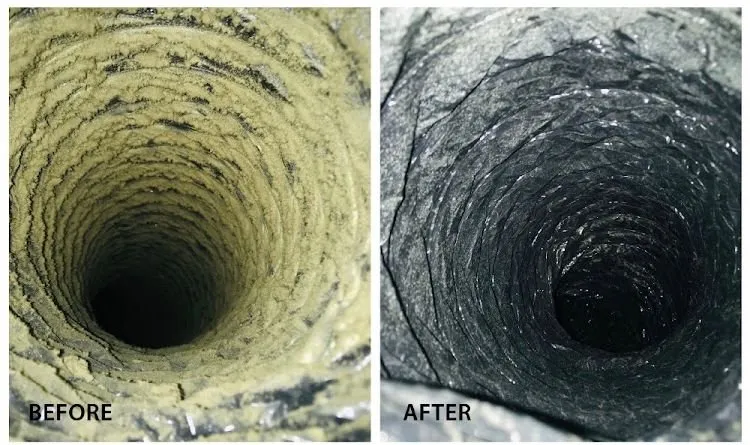
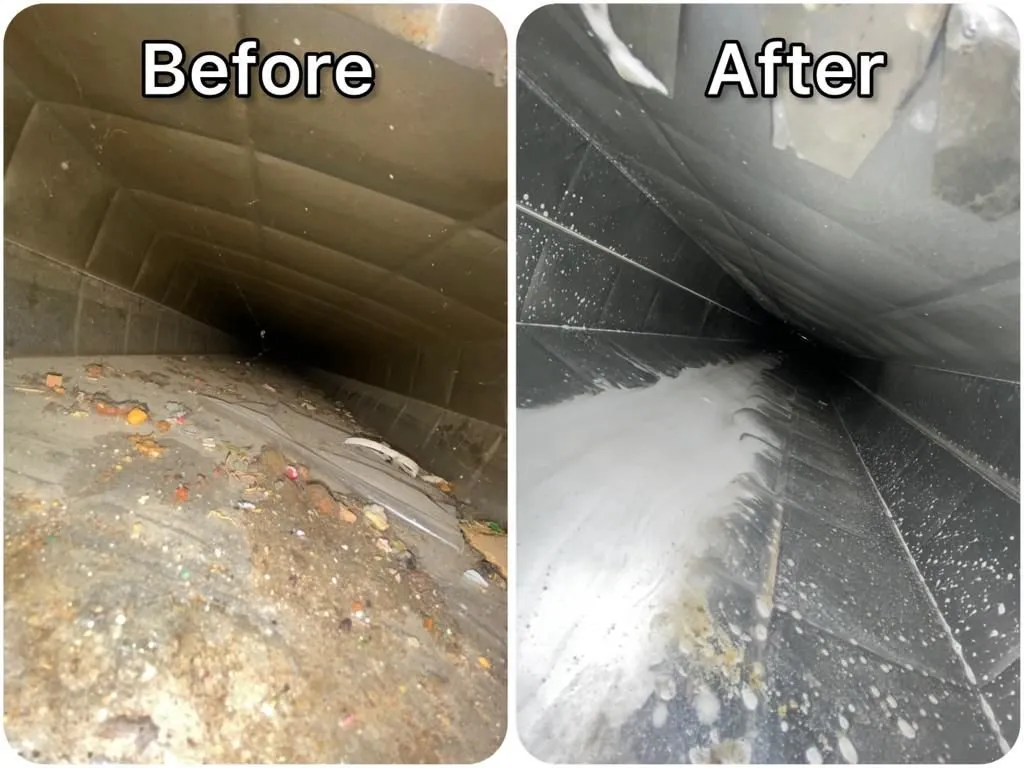
The ducts. We clean the supply and return ducts and the registers, using rotating brushes to loosen debris and a HEPA-filtered vacuum to remove it.
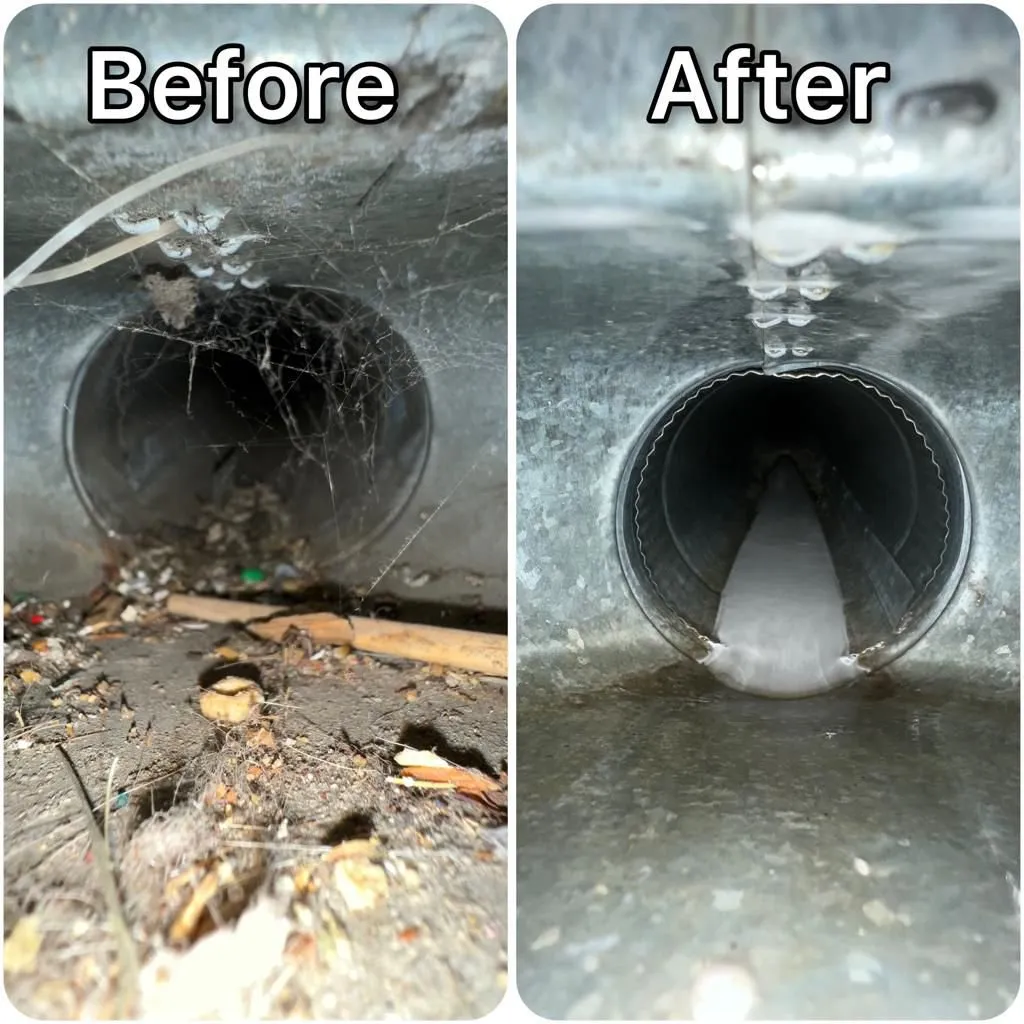
The dryer vent. We clean the vent run from the dryer connection through to the exterior hood and check that the outside flap opens and closes properly.
Anything we notice. If we see a problem along the way, such as a crushed dryer hose behind the machine or a duct joint that looks loose, we'll mention it. Repairs to ductwork or the HVAC equipment belong to an HVAC contractor, and dryer repairs belong to an appliance technician. We'll tell you plainly which is which.
How to prepare
A little prep makes the visit go smoothly:
- Clear the registers. Move furniture, rugs and boxes that sit on or in front of vents, including returns.
- Pull the dryer out a bit if you can, or at least clear the space around it. Empty the dryer and clean the lint screen.
- Know where the outside vent is. If it's on the roof or behind a fence, let us know when you book.
- Point out problem spots. A room that gets dusty fast, a vent that whistles, or loads that take two cycles to dry are all useful to mention.
- Plan for pets. A closed room or crate keeps them comfortable and out of the work area.
Signs it's time for each
You don't have to wait for symptoms, but they help you decide what to book.
For the ducts, the EPA describes cleaning as worth considering when there's excessive dust or debris in the ducts, particles blowing out of supply registers, or signs of vermin. Light dust is normal.
For the dryer vent, the U.S. Fire Administration points to clothes taking longer than usual to dry, or feeling hotter than normal at the end of a cycle, as signs the vent may be clogged. The NFPA tip sheet recommends cleaning the vent at least once a year, or more often if drying times increase.
Not sure if we cover your neighborhood? Check our service areas.
If you're seeing signs of both, a combined visit is the efficient choice. Request a free estimate from Moment Air Duct Cleaning Kent, mention that you'd like both services, and we'll plan the visit around your home.
Sources
- Should You Have the Air Ducts in Your Home Cleaned?, U.S. EPA, last updated February 19, 2026
- Clothes Dryer Fire Safety, U.S. Fire Administration, accessed October 22, 2026
- Clothes Dryer Fires in Residential Buildings (2008-2010), Topical Fire Report Series Vol. 13, Issue 7, U.S. Fire Administration, August 2012
- Clothes Dryer & Washing Machine Safety, NFPA, published by the U.S. Department of Energy, accessed October 22, 2026